
Introduction: Why Every Dog Owner Is Talking About Bully Sticks
If you’ve spent any time searching for the perfect dog chew, you’ve probably come across bully sticks for dogs more than once. And for good reason.
These single-ingredient, all-natural chews have become one of the most popular treats in the pet industry — and they’ve earned that reputation honestly. Whether your dog is a relentless chewer who destroys every toy in minutes, or a gentle nibbler who just needs something to keep them occupied, bully sticks consistently deliver.
But with so many options on the market, it’s easy to feel overwhelmed. Which brand is the safest? Are they actually digestible? What size should you get for your breed? Is odor really a problem?
This guide answers all of those questions — and more. By the end, you’ll know exactly what to look for, what to avoid, and why OKINIIRI PET’s bully stick collection is a go-to choice for health-conscious dog owners across the United States.
Let’s dig in.
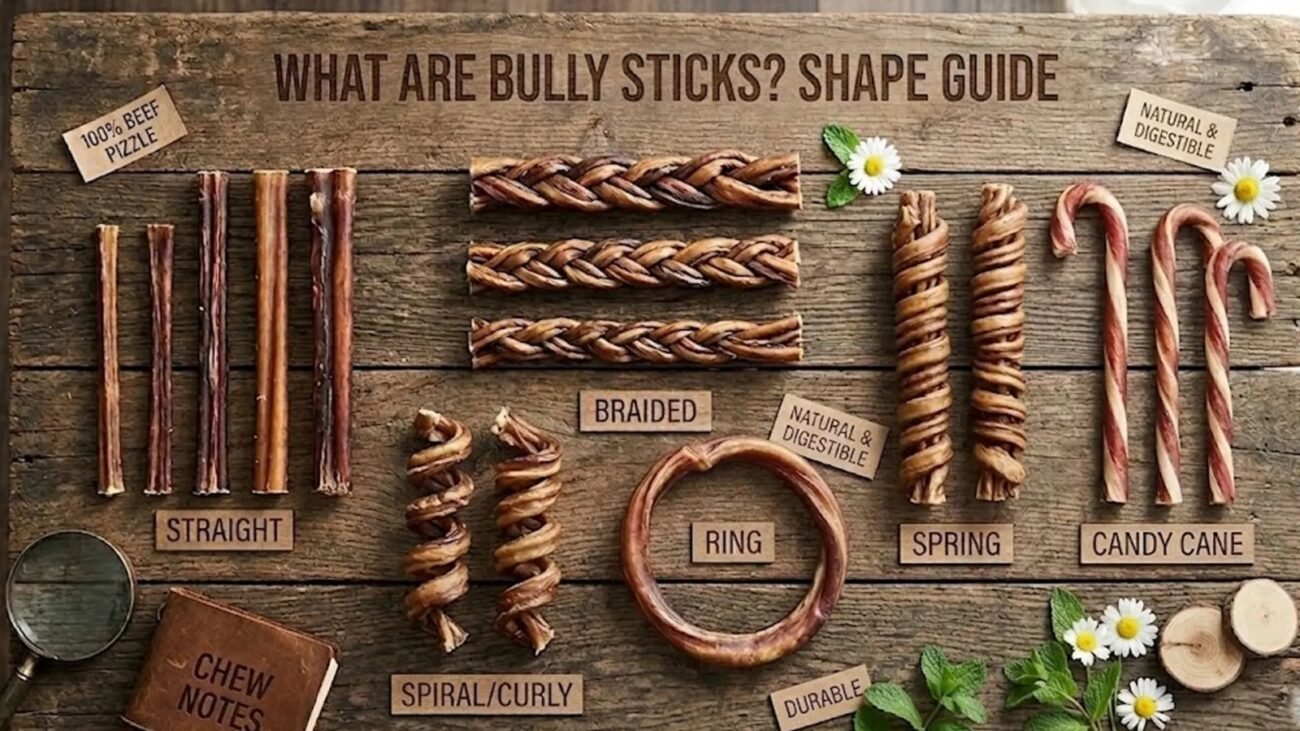
What Are Bully Sticks for Dogs?
Bully sticks — also called pizzle sticks — are natural dog chews made from dried bull or steer pizzle (the muscle from the bull’s penis). While that sounds surprising at first, the reality is that bully sticks are one of the cleanest, most natural chews available to dogs.
They’re minimally processed. No artificial additives. No synthetic preservatives. Just pure, dried beef muscle — making them a favorite among pet parents who prioritize clean, wholesome nutrition for their dogs.
Here’s a quick breakdown of what bully sticks actually are:
- Single ingredient: 100% beef muscle
- High in protein: Great for active dogs
- Fully digestible: Unlike rawhide, bully sticks break down safely in your dog’s digestive system
- Available in multiple shapes: Straight, braided, curly, ring-shaped, and more
- Long-lasting: Depending on your dog’s chew intensity, one stick can last anywhere from 20 minutes to several hours
They’ve been a staple in the natural pet care world for decades, and their popularity has only grown as more dog owners move away from artificial chews and toward cleaner alternatives.
Top Benefits of Bully Sticks for Dogs
So why do so many veterinarians and dog trainers recommend bully sticks? The benefits are real, and they go well beyond simply keeping your dog busy.
1. They’re Completely Natural
Bully sticks are made from one ingredient: beef. That’s it. No fillers, no by-products, no mystery chemicals. For pet parents who read labels carefully, that simplicity is a major selling point.
When you choose premium bully sticks from a trusted source, you’re giving your dog a chew that comes directly from nature — the way treats were meant to be.
2. They’re Highly Digestible
One of the biggest concerns with dog chews is digestibility. Hard plastic toys can cause intestinal blockages. Rawhide can swell and become dangerous. Bully sticks, however, are fully digestible dog chews that break down naturally as your dog chews and swallows small pieces.
This makes them significantly safer than many alternatives, especially for dogs who tend to swallow large chunks.
3. They Keep Dogs Mentally Stimulated
Chewing is a deeply instinctual behavior for dogs. It reduces anxiety, relieves boredom, and provides a healthy outlet for energy. Bully sticks offer long-lasting mental engagement, which is especially valuable for high-energy breeds, puppies teething, and dogs prone to destructive behavior.
Studies in dog behavioral science consistently show that chewing reduces cortisol levels in dogs — essentially acting as a natural stress reliever.
4. They Support Dental Health
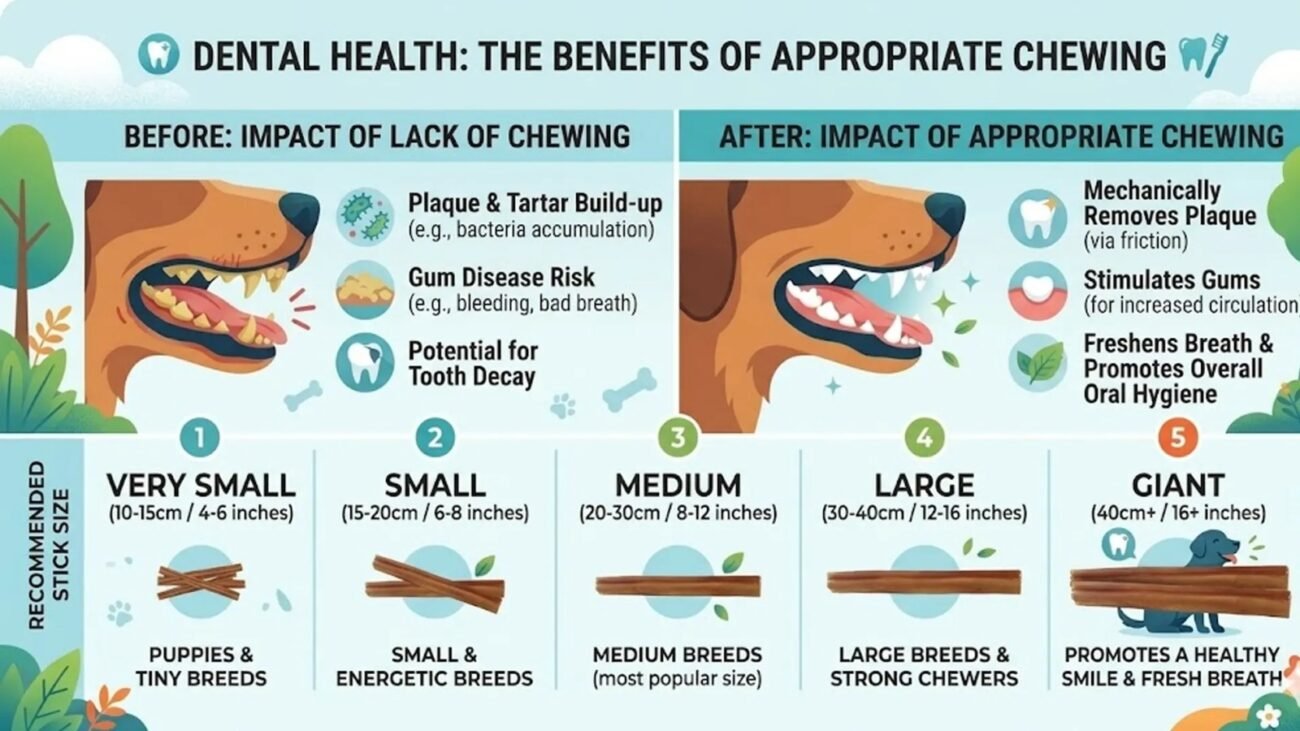
Here’s something a lot of dog owners don’t realize: chewing naturally cleans your dog’s teeth. The mechanical action of gnawing on a bully stick helps scrape away plaque and tartar buildup, which can reduce the risk of periodontal disease — one of the most common health problems in dogs.
We’ll cover this in more depth in the dental health section below.
5. They’re High in Protein
Bully sticks are a lean, protein-rich chew. They contain very little fat compared to other animal-based treats, making them a solid option for dogs on moderate-calorie diets. That said, they’re not calorie-free — so factor them into your dog’s daily intake.
6. They’re Grain-Free and Allergy-Friendly
For dogs with food sensitivities, finding safe treats can be a challenge. Bully sticks are naturally grain-free and gluten-free, making them suitable for dogs with wheat, corn, or soy allergies. Just be sure to choose products that are sourced and processed without cross-contamination if allergies are a serious concern.

Are Bully Sticks Safe for Dogs?
This is the question every responsible pet owner should be asking — and the honest answer is: yes, when used correctly.
Bully sticks are among the safest chews for dogs available today. But like any chew, they come with considerations you should be aware of.
What Makes Bully Sticks Generally Safe
- They’re digestible, so even if your dog swallows pieces, the risk of blockage is much lower than with rawhide or nylon chews
- They don’t splinter the way bones can, reducing the risk of sharp fragments causing internal damage
- They’re made from natural animal protein, which dogs’ digestive systems are designed to process
- They don’t contain toxic ingredients like xylitol, artificial flavors, or chemical preservatives
Safety Concerns to Be Aware Of
Calorie content: Bully sticks contain protein and calories. A 6-inch bully stick typically has between 80–130 calories. For small dogs or dogs on a weight management plan, this should be factored into their daily intake.
Bacterial contamination risk: Like all raw or semi-dried meat products, bully sticks can carry bacteria such as Salmonella or E. coli. Always buy from reputable suppliers who test their products, and wash your hands after handling. Keep bully sticks away from immunocompromised individuals.
Choking hazard at the end: As a bully stick gets chewed down to a small nub, it can become a choking hazard for dogs who try to swallow it whole. Monitor your dog closely and take the stick away when it gets small enough to be swallowed in one piece.
Not all dogs are equal: Puppies under 12 weeks, senior dogs with dental issues, or dogs recovering from illness may need to avoid or limit chew treats. When in doubt, ask your veterinarian.
The Bottom Line on Safety
When purchased from a quality brand and given under supervision, bully sticks are one of the safest natural chews you can offer your dog. Just apply common sense, watch for the end nub, and choose products from brands that prioritize sourcing transparency.
How to Choose the Best Bully Sticks for Dogs
Not all bully sticks are created equal. The market is full of options ranging from premium, responsibly sourced products to cheap imports with questionable processing standards. Here’s what to look for when choosing the best bully sticks for dogs.
1. Source and Origin
Where the bully sticks come from matters. Look for products made from grass-fed, free-range cattle sourced from the United States, Brazil, or Bangladesh — countries with established quality standards for beef production.
Avoid products with vague labeling that don’t specify the country of origin. Cheaper options often come from countries with lax food safety regulations.
2. Processing Method
Look for bully sticks that are:
- Low-odor or odor-free (more on this below)
- Dried rather than smoked with artificial flavors or additives
- Free of hormones and antibiotics — especially important for dogs with sensitivities
The fewer steps in the processing chain, the better.
3. Thickness and Durability
Bully sticks come in thin, regular, thick, and jumbo sizes. Your choice should depend on your dog’s chewing style:
| Dog Type | Recommended Thickness |
|---|---|
| Light chewer / small dog | Thin (junior) sticks |
| Average chewer / medium dog | Regular or standard |
| Power chewer / large dog | Thick or jumbo |
| Extreme chewer / large breed | Braided or extra-thick |
Choosing the wrong thickness can result in the stick being consumed too fast (thin sticks for large dogs) or being too difficult to chew (thick sticks for tiny dogs).
4. Shape Variety
Beyond the classic straight stick, there are several shapes worth considering:
- Braided bully sticks: Last longer, great for heavy chewers
- Ring or donut shape: Harder to hold but entertaining for dogs
- Curly/spiral: A bit softer, good for medium chewers
- Jumbo bully sticks: Extra-thick for powerful jaws
5. Certifications and Transparency
The best brands will clearly list:
- Country of origin
- Manufacturing facility information
- Testing for Salmonella and other pathogens
- No artificial additives or preservatives
OKINIIRI PET checks every one of these boxes. Their bully sticks collection is carefully curated to meet the standards health-focused pet owners expect.
Bully Sticks by Dog Size: Finding the Right Fit
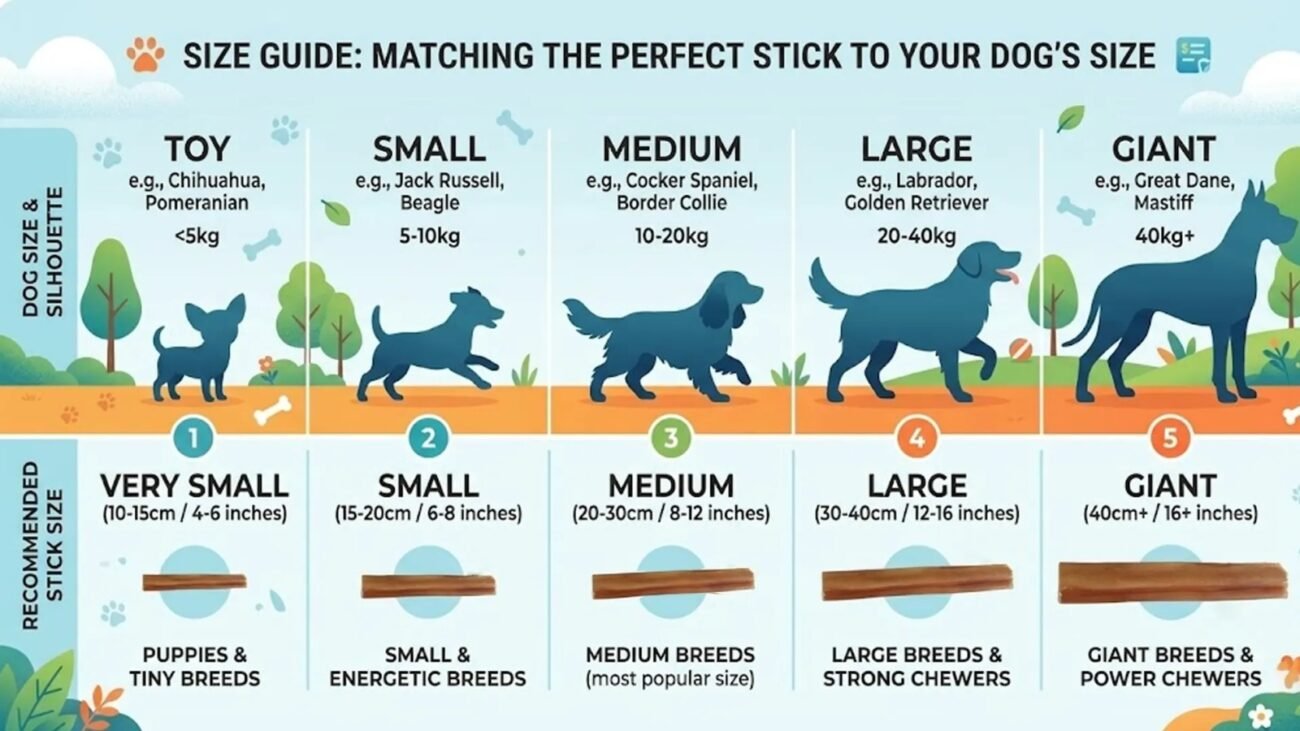
One of the most common mistakes dog owners make is buying the wrong size bully stick. Here’s a simple size guide to match your dog to the right chew.
Small Dogs (Under 20 lbs)
Best choice: Thin, 5–6 inch bully sticks or junior-sized options
Small dogs like Chihuahuas, Yorkies, and toy breeds need thinner, shorter sticks they can hold comfortably and chew without straining their jaw. Look for options specifically labeled for small breeds.
Medium Dogs (20–50 lbs)
Best choice: Standard 6–12 inch bully sticks, regular thickness
Medium breeds like Beagles, Cocker Spaniels, and Bulldogs do well with standard-sized sticks. These will last a reasonable amount of time without being too tough on their teeth.
Large Dogs (50–90 lbs)
Best choice: Thick, 12-inch bully sticks or braided options
Labs, Golden Retrievers, and German Shepherds can chew through thin sticks in minutes. Go for a thicker option or a braided bully stick that provides more resistance and lasts longer.
Extra-Large / Power Chewers (90+ lbs)
Best choice: Jumbo or braided thick bully sticks, 12+ inches
For Great Danes, Mastiffs, and other giant breeds — or any dog that destroys every chew within minutes — the thickest bully sticks and heavily braided options are your best bet.
Odor-Free Bully Sticks: What You Need to Know
Let’s address the elephant in the room: bully sticks can smell.
If you’ve ever handed your dog a bully stick and then immediately noticed a strong barnyard odor filling your living room, you already know what we’re talking about. The smell comes from residual natural compounds in the beef pizzle during the drying process.
The good news? Odor-free bully sticks exist, and they’re a game changer for pet owners who want all the benefits without the smell.
How Are Odor-Free Bully Sticks Made?
Odor-free bully sticks go through an additional processing step — typically a more thorough drying or cleaning process — that removes the compounds responsible for the strong smell. They use no artificial fragrances or masking agents; the goal is simply cleaner processing.
Are Odor-Free Options Less Natural?
Not necessarily. As long as no synthetic additives are introduced during the odor-reduction process, odor-free bully sticks remain just as natural as standard ones. Always check the ingredient list to confirm.
When to Choose Odor-Free
- You live in a small apartment or enclosed space
- You’re sensitive to strong odors
- You have house guests or young children who react to the smell
- You store chews indoors
Many pet owners find that making the switch to odor-free bully sticks is one of the simplest quality-of-life improvements they can make — for themselves and their household.
Bully Sticks and Dental Health: The Overlooked Benefit
Most dog owners think about bully sticks primarily as a treat or a boredom-buster. But there’s a dental health dimension that deserves more attention.
How Chewing Cleans Teeth
The repetitive gnawing motion involved in working through a bully stick creates mechanical abrasion along the tooth surface. This friction helps loosen and scrape away plaque and tartar — the same buildup that leads to periodontal disease in dogs.
According to the American Veterinary Dental College, 80% of dogs show signs of periodontal disease by age 3. Regular chewing doesn’t replace professional dental cleanings, but it can meaningfully slow the buildup of tartar between vet visits.
What Makes Bully Sticks Better Than Some “Dental Chews”?
Many commercial dog dental chews are loaded with artificial ingredients, added sugars, and synthetic compounds designed to mask bad breath rather than address its root cause. Bully sticks, by contrast, are pure protein with no added sugar — which means they clean without feeding the bacterial growth that causes bad breath.
Think of them as natural dog dental chews that happen to be completely edible and nutritious.
Tips for Maximizing Dental Benefits
- Offer bully sticks regularly — 3 to 5 times per week for best results
- Complement with daily tooth brushing using pet-safe toothpaste
- Schedule annual professional dental cleanings with your vet
- Monitor gum health and watch for signs of dental disease (bad breath, red gums, difficulty eating)
Safety Tips and Supervision Guidelines
Even with the safest natural dog chews, responsible supervision is essential. Here are the most important safety practices to follow:
1. Always supervise chew sessions. Never leave your dog unattended with a bully stick — especially if they’re an aggressive chewer. This allows you to monitor their progress and remove the stick before it becomes a choking hazard.
2. Remove the stick when it’s down to 2–3 inches. Once a bully stick is short enough to swallow whole, it becomes a choking risk. Take it away at this point and replace it with a fresh one.
3. Introduce chews gradually. If your dog has never had a bully stick before, start with shorter sessions and monitor their digestion. Some dogs experience mild stomach upset when first introduced to a new treat.
4. One stick per session is enough. Bully sticks have calories. Giving too many at once can cause digestive upset or contribute to weight gain. One per day (or every other day) is plenty for most dogs.
5. Store properly. Keep unused bully sticks in a cool, dry place. Some pet owners store them in the freezer to extend freshness. Avoid leaving them in direct sunlight or humid environments.
6. Talk to your vet. If your dog has a history of pancreatitis, digestive issues, or other health concerns, get your vet’s okay before introducing any new chew.
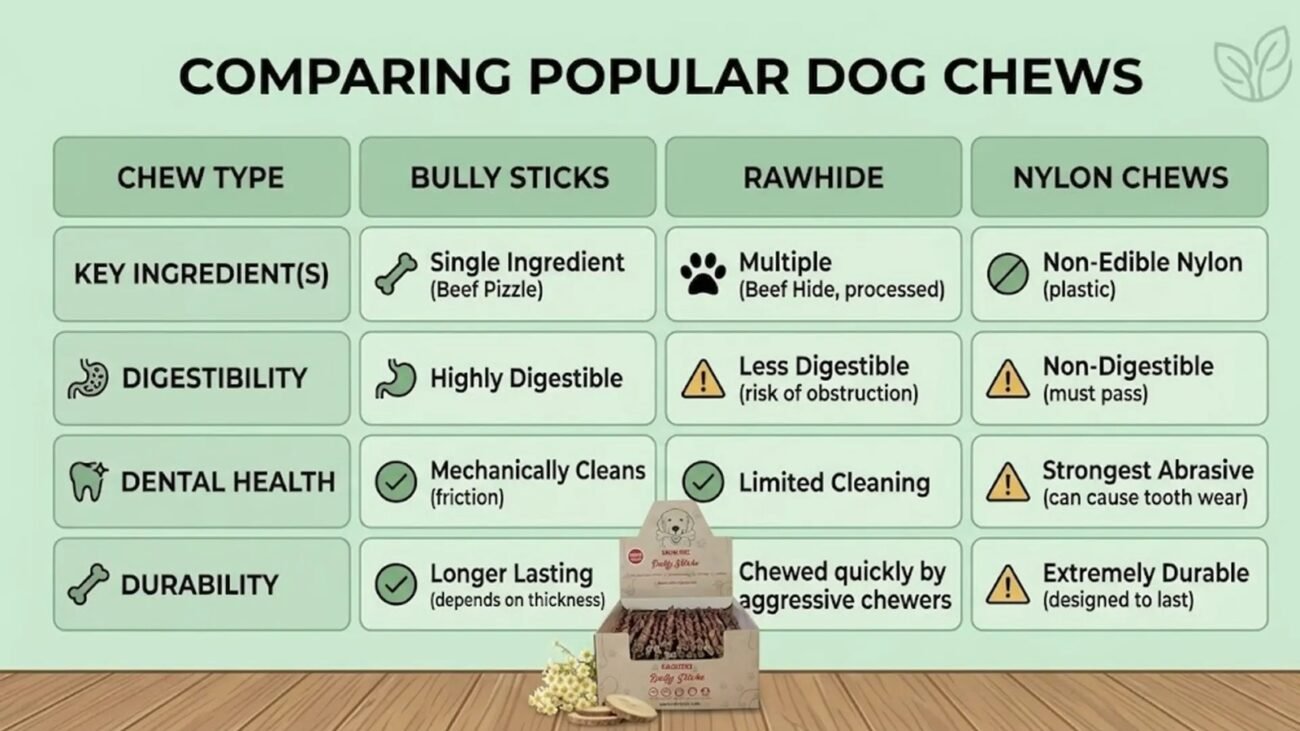
How Bully Sticks Compare to Other Dog Chews
It helps to understand how bully sticks stack up against the competition.
| Chew Type | Digestible | Natural | Long-Lasting | Safe for Most Dogs | Dental Benefit |
|---|---|---|---|---|---|
| Bully Sticks | ✅ Yes | ✅ Yes | ✅ Yes | ✅ Yes | ✅ Yes |
| Rawhide | ❌ No | ⚠️ Processed | ✅ Yes | ❌ Risk of blockage | ⚠️ Limited |
| Nylon Chews | ❌ No | ❌ No | ✅ Yes | ⚠️ May splinter | ⚠️ Limited |
| Dental Sticks | ✅ Yes | ⚠️ Often artificial | ❌ Short | ✅ Yes | ✅ Yes |
| Antlers | ✅ Yes | ✅ Yes | ✅ Very | ⚠️ Hard on teeth | ⚠️ Limited |
| Pig Ears | ✅ Yes | ✅ Yes | ❌ Short | ✅ Yes | ⚠️ Limited |
| Beef Tendons | ✅ Yes | ✅ Yes | ✅ Yes | ✅ Yes | ✅ Yes |
Bully sticks consistently come out ahead in digestibility, safety, and nutritional value. For most dogs, they offer the best overall combination of safety, entertainment, and health benefits.
Conclusion: Give Your Dog the Chew They Deserve
At the end of the day, bully sticks for dogs earn their popularity because they genuinely deliver. They’re natural, digestible, long-lasting, protein-rich, and beneficial for dental health — all without artificial additives or synthetic ingredients.
Whether you’re searching for long-lasting dog chews to keep your power chewer busy, odor-free bully sticks for your apartment-friendly lifestyle, or safe chews for dogs that you can feel good about giving, bully sticks check every box.
The key is choosing quality over convenience. Source matters. Processing matters. Transparency matters.
That’s exactly the standard OKINIIRI PET holds itself to with every product in their lineup.