

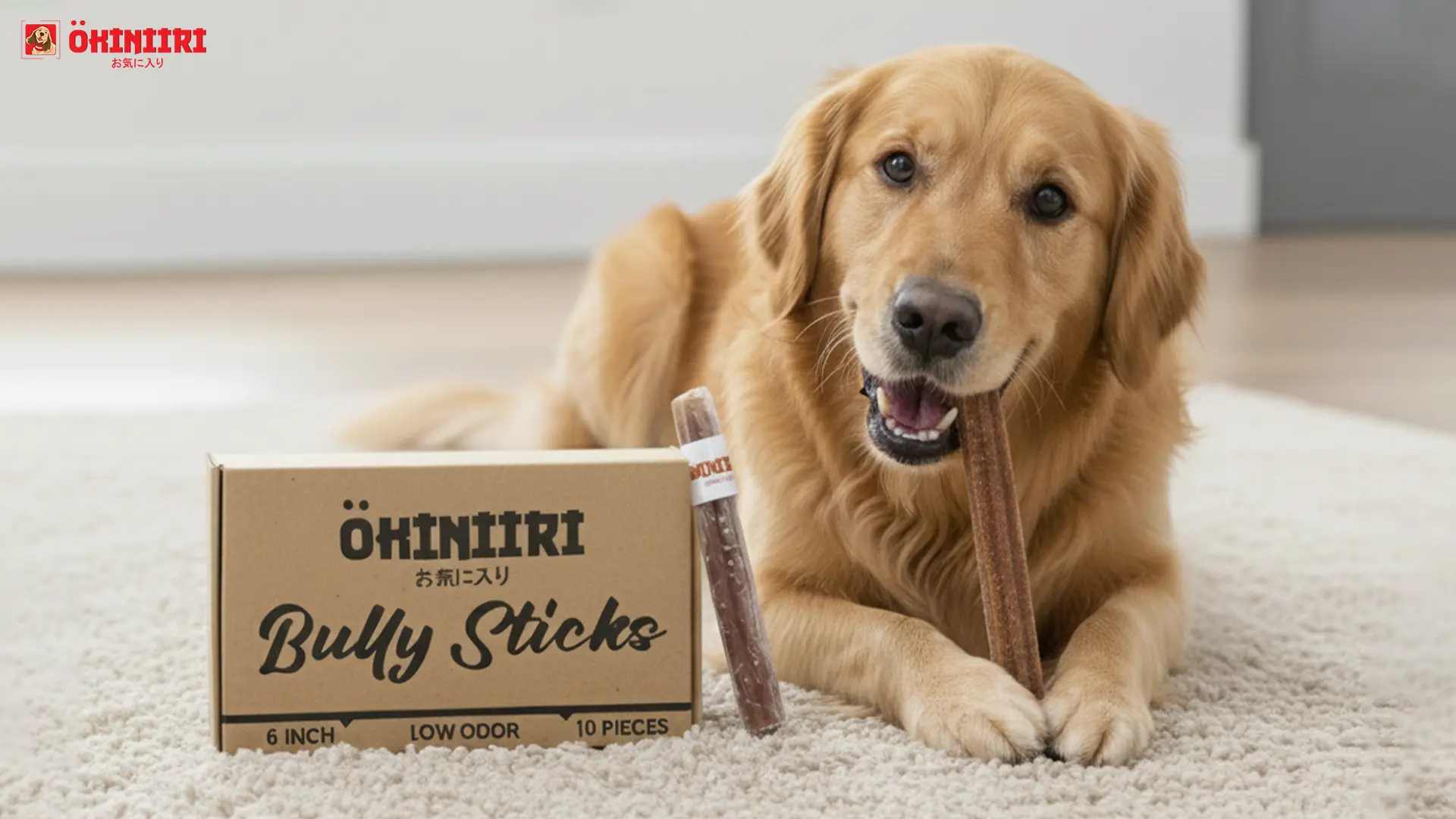
When it comes to dog chews, you’ve probably heard of bully sticks. They’re popular, but that raises a big question: are bully sticks safe for dogs? In this article, we will examine what these treats are. We’ll discuss if they’re good or bad for your dog. We will also explain how to give them properly. We will focus on puppies, aggressive chewers, and daily use.
What are bully sticks made of?
Before we judge whether they’re safe or not, let’s understand what they are.
- Bully sticks are essentially made from the penis of a bull or steer (i.e., “pizzle”)
- The manufacturing process typically involves washing, then drying or baking the pizzle until it becomes a tough chew.
- They are often marketed as “single‐ingredient” chews (just beef/pizzle) with no additives.
So, they’re not rawhide or artificial; they’re a natural animal‐derived chew. But “natural” doesn’t automatically mean “safe in every situation”.

Are bully sticks healthy for dogs?
The good news: yes, in many cases they can be a healthy option.
- According to American Kennel Club (AKC) , as bully sticks are made from beef muscle/pizzle, they are rich in protein, and many dogs enjoy them.
- They are more digestible than many rawhide chews. For example, the AKC notes that bully sticks “don’t splinter like bones or some other chews can” and “are highly digestible”.
- They also offer a chewing outlet which is good for mental stimulation and dental health, by helping scrape away some tartar via chewing action.
So yes – for many dogs, bully sticks can be a healthy and enjoyable treat when chosen correctly and used responsibly.
Are bully sticks bad for dogs (and what are the drawbacks)?
However this is important as there are risks and situations where bully sticks might not be appropriate.
1. Choking hazard & swallowing large chunks
- Even though they are digestible, when a bully stick becomes small enough it can be swallowed whole and pose a choking risk.
- One Reddit user recounted:
“The emergency vet … told me that they are a choking hazard when they are nubs and that they can also be contaminated causing severe stomach upset and diarrhea.” - The risk isn’t zero, and supervision is key.
2. Digestive upsets or bacterial contamination
- According to a PMC article, nutrition and microbial analysis of bully sticks and survey opinions about pet treats, some bully sticks have been found to carry bacterial contamination.
- For dogs with sensitive stomachs, or who eat a lot at once, gastrointestinal upset (vomiting, diarrhea) is possible.
3. Calorie load & nutritional balance
- Ellen Schmidt mentioned that though they are rich in protein, bully sticks also contain calories. Over‐feeding can impact weight/health.
- They are not the whole diet, treats should remain a small part (<10%) of daily calories.
4. Dental risks / inappropriate for some dogs
- DR. Nicole wrote if a dog chews too hard, or if the chew is very hard (or frozen) that can risk tooth fractures.
- Similarly, very young puppies or dogs with dental problems may be better with gentler chews.
Are bully sticks digestible?
Yes, relative to many other chews, bully sticks perform well in digestibility.
- The AKC states they are “highly digestible, unlike some other chews or treats”.
- One source noted: “bully sticks are highly digestible … the risk of intestinal blockage is very low”.
- But being digestible doesn’t eliminate all risk — the key dangers are swallowing large pieces/chunks and supervision.
So, yes, digestible but not entirely risk‐free.
Are bully sticks safe for puppies?
What about the little ones? Good question. The answer: they can be, under the right conditions.
- Some sources say bully sticks are safe for puppies, as long as the puppy is old enough to chew, has some of its adult teeth, and you supervise.
- But you should limit chewing time, choose smaller/thinner sticks, and monitor for stomach sensitivity.
- For very young puppies, or those with dental issues, gentler chews may be safer.
In short: yes they can be safe for puppies, but extra caution is warranted.
Side effects of bully sticks
Here’s a quick look at possible side‐effects:
- Choking or swallowing large pieces (especially the “nub” when stick is mostly consumed)
- Vomiting/diarrhea from over‐consumption or bacterial contamination
- Weight gain if used too frequently (because of calories)
- Dental issues (rare but possible if chewing is too hard or stick too rigid/frozen)
- Allergic reaction if dog is sensitive to beef protein
How often can dogs eat bully sticks?
How frequently should you let your dog enjoy one? Here are suggested guidelines:
- Treats (including bully sticks) should remain a small portion of total calories (e.g., < 10%).
- Many sources recommend 2-3 times per week for many dogs — not daily for most.
- Some suggest limiting chewing time (e.g., 20-30 minutes) rather than letting a dog chew all day.
- Always monitor the size of the chew — once it becomes small enough to swallow, remove it.
So: moderation + supervision = the key.
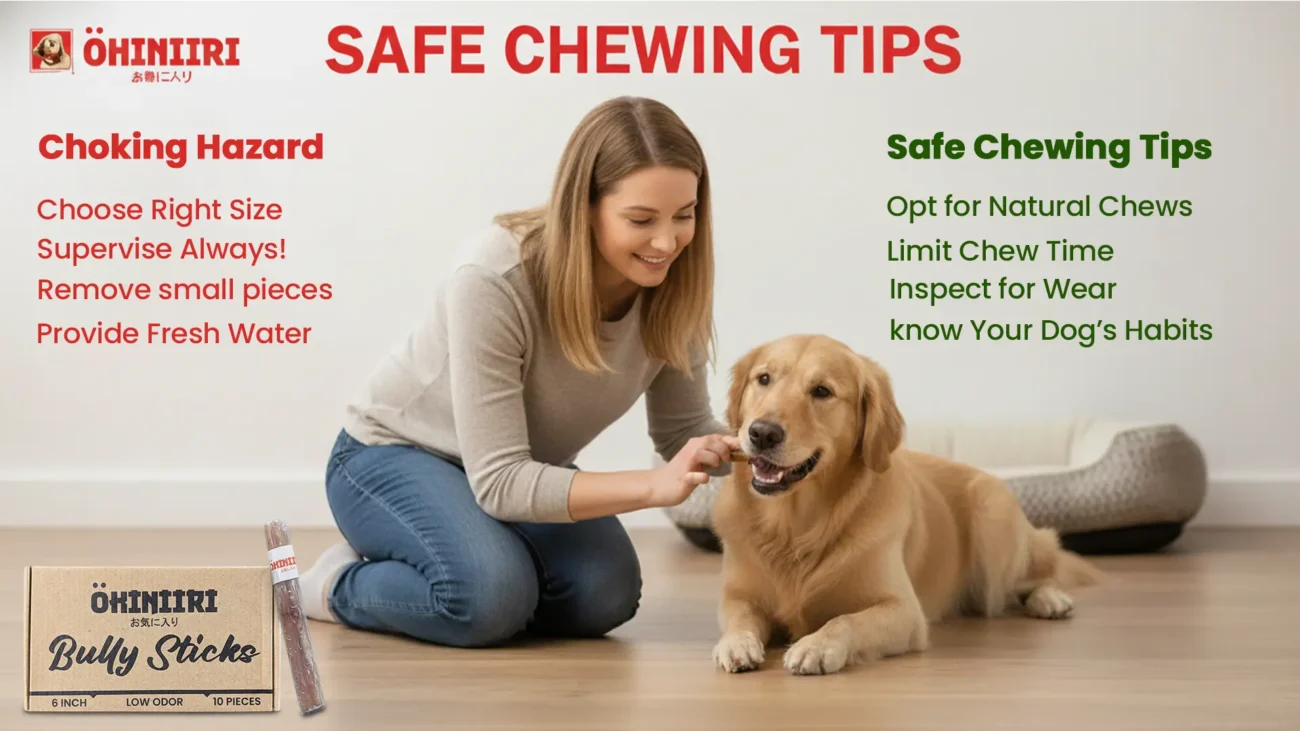
Bully sticks choking hazard & safe dog treat tips
Since we’ve identified the hazard, let’s talk about how to reduce risk.
Tips to keep your dog safe:
- Choose the right size: for a small dog pick a thicker/longer stick rather than a tiny one they can swallow quickly.
- Supervise chewing: don’t just toss a stick and leave the room.
- Remove the stick when it becomes a small nub or only a few inches remain.
- Store chews properly, buy from reputable sources (good processing, advertising transparency) to reduce contamination risk.
- Avoid giving frozen or extremely hard bully sticks if your dog has dental problems.
- On days your dog gets a bully stick, you might reduce their normal food slightly to balance calories.
Safe alternatives to bully sticks & veterinarian approved dog chews
If you’re thinking: “Maybe I’ll try something different”, here are some alternatives and guidelines:
- Rawhide: Often less digestible, more splinter risk as many experts prefer bully sticks to rawhide.
- Yak chews / Himalayan chews: These can be long-lasting and natural alternatives (though still need supervision).
- Dental chews or softer edible chews: For dogs that are not heavy chewers or have dental issues.
- Veterinarian-approved chews: Always check with your vet for your specific dog (age, breed, chewing strength, health condition).
- Ensure alternatives are still safe: no heavy preservatives/fillers, appropriate size for your dog, and you supervise chewing.
- Remember: even “safe” chews are only safe if used properly.
Final Verdict: Are bully sticks safe for dogs?
In a nutshell: Yes, bully sticks can be safe and beneficial for many dogs but only when you pick quality products, supervise usage, choose the right size, and don’t over-feed. They are not automatically “perfect” for every dog.
If you do it right, your dog can enjoy a tasty, protein-rich chew that helps satisfy his natural chewing instinct, supports dental health and gives mental enrichment. If you do it wrong (wrong size, no supervision, too frequent, low quality), you might increase risks of choking, digestive upset or weight issues.
Quick FAQ for pet parents
Q: Can dogs get sick from bully sticks?
A: Yes, especially if they swallow large chunks, or if the product is contaminated.
Q: What is the safest chew I can give my aggressive chewer?
A: For aggressive chewers pick a thicker bully stick (or braided type) from a reputable source, always pick size appropriate, supervise, and consider alternative very durable chews recommended by your vet.
Q: How small is too small for a bully stick? When should I take it away?
A: When the remaining piece is small enough that your dog could swallow it whole, which is when the choking hazard increases. Many sources say remove at that point.
Q: Can I give bully sticks every day?
A: It’s better to avoid daily for most dogs unless guided by your vet 2-3 times a week is often suggested.